Negotiation is a crucial skill for financial leaders, involving dialogue and compromise to reach mutually beneficial agreements. It plays a pivotal role in guiding financial decisions, maintaining balance between different interests, and ensuring that agreements benefit both the organization and its counterparts. Financial leaders must develop negotiation skills to navigate various scenarios and manage relationships effectively.
Negotiation skills help financial leaders secure favorable terms, resolve conflicts, and maximize value for their organizations. This article aims to provide strategies and insights for honing negotiation skills, ensuring effective leadership, and achieving positive outcomes across different scenarios. By mastering negotiation techniques, leaders can foster collaboration and secure long-term success for their companies.
Preparation and Planning
Setting Goals
Clear goals guide the negotiation process, helping leaders identify priorities, concessions, and acceptable outcomes. Goals offer a roadmap for negotiations, highlighting key objectives and setting benchmarks for success. Understanding values, boundaries, and non-negotiables is crucial to creating a balanced approach that considers all stakeholders.
BATNA
The Best Alternative to a Negotiated Agreement (BATNA) is a crucial concept, offering a fallback plan if negotiations fail. A strong BATNA provides a solid foundation for decision-making, enabling negotiators to understand their limits and make informed choices. This backup plan also empowers negotiators with confidence, helping them navigate challenging situations.
Communication and Relationship Building
Active Listening
Active listening is essential for understanding the other party’s perspective, building trust, and finding common ground. By listening attentively, financial leaders can identify the motivations, interests, and concerns of their counterparts, allowing them to address these effectively. Active listening also helps build rapport, fostering a collaborative atmosphere that facilitates problem-solving and reduces potential conflicts.
Relationship Building
Establishing rapport with the counterpart can facilitate open communication and collaborative problem-solving. Building relationships with counterparts before and during negotiations can create a sense of trust and mutual respect, helping to navigate difficult conversations and reach agreements. This relationship-focused approach also encourages long-term partnerships, benefiting both parties over time.
Negotiation Strategies
Focus on Interests
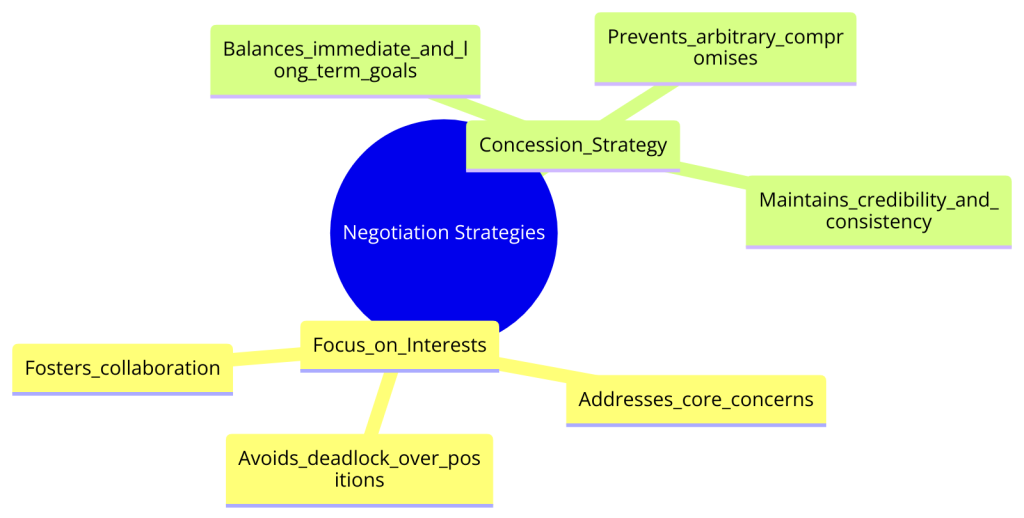
Effective negotiators prioritize the underlying interests of all parties, leading to mutually beneficial solutions. This approach helps avoid deadlock over specific positions, allowing negotiators to explore alternative solutions that address core concerns. By focusing on interests, leaders can identify areas of common ground, fostering collaboration and positive outcomes.
Concession Strategy
Leaders should prepare for concessions, balancing trade-offs with objectives to reach agreements. This strategy involves identifying which concessions are acceptable, what can be exchanged, and how to maintain the balance between immediate agreements and long-term goals. Developing a concession strategy in advance also prevents arbitrary or unexpected compromises, maintaining negotiation credibility and consistency.
Emotional Intelligence and Adaptability
Emotional Intelligence
Understanding emotions during negotiations helps adjust strategies and respond effectively to different scenarios. Recognizing the emotional cues of counterparts, such as anxiety, confidence, or hesitation, provides insights into their motivations and concerns. Emotional intelligence also helps manage one’s reactions, preventing impulsive decisions and maintaining a balanced approach.
Adaptability
Flexibility is key, allowing negotiators to explore new ideas and adjust to evolving dynamics. As negotiations progress, new information or changing circumstances may require shifts in strategy. Adaptable negotiators can explore alternative solutions, navigate unexpected developments, and pivot their approaches to reach agreements that satisfy all parties.
Continuous Learning and Improvement
Training
Leaders should seek opportunities to refine their skills through workshops, coaching, and self-study, adapting to new trends and strategies. Training programs offer practical tools and techniques, enhancing negotiation skills and expanding knowledge. Regular training also keeps leaders informed about new tactics and global economic developments, improving their negotiation effectiveness.
Reflection
Regularly reviewing negotiation experiences helps identify strengths and weaknesses, leading to improvement. Reflection encourages self-awareness, highlighting areas for growth and reinforcing successful strategies. This continuous learning cycle ensures that leaders build on their experiences, becoming more effective negotiators.
In conclusion, negotiation involves preparation, communication, strategy, and adaptability, contributing to leadership success. Effective negotiation skills enhance leadership, fostering collaboration, innovation, and sustainable outcomes for organizations. Leaders should focus on setting clear goals, developing a concession strategy, and building relationships through active listening and rapport. Emotional intelligence and adaptability are also key, helping negotiators adjust to different scenarios and respond effectively. Continuous learning and reflection allow leaders to refine their skills, making them more effective in navigating complex situations and securing positive outcomes. By mastering negotiation, leaders can guide their organizations toward long-term success.